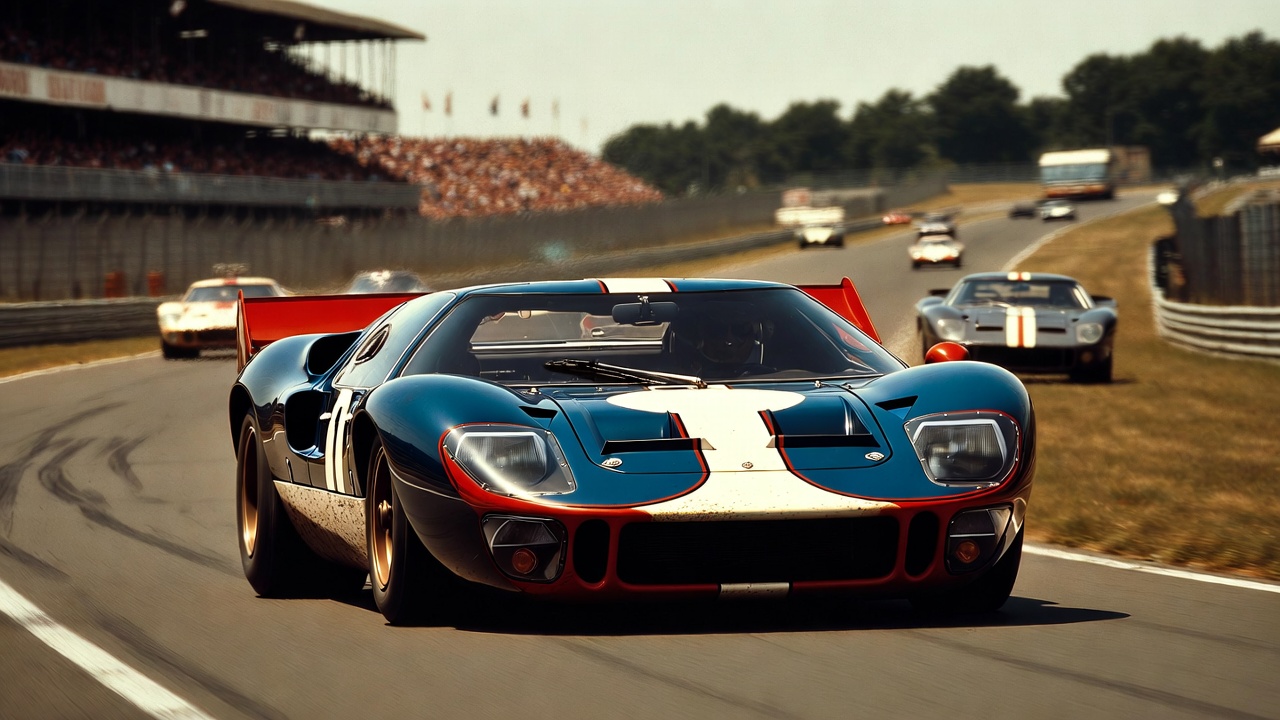
Some cars are fast. Some cars are beautiful. And then there are cars that rewrite history. The Ford GT40 belongs firmly in the third category.
Born out of rivalry, frustration, and pure ambition, this iconic machine wasn’t just built to race—it was built to win, and win big. At a time when European manufacturers dominated endurance racing, Ford decided to challenge the status quo with a car that would become one of the greatest legends in motorsport history. Even decades later, the story of the Ford GT40 still fascinates car lovers, historians, and beginners alike.
But the GT40 is more than just a race car with trophies. It represents a turning point in global motorsport—a moment when American engineering stepped onto European soil and proved it could dominate the toughest endurance challenge in the world. It wasn’t created as a marketing gimmick or a limited-edition road toy. It was built with a singular mission: defeat Ferrari at Le Mans.
What makes the story even more compelling is the level of investment, risk, and determination behind it. Ford poured millions of dollars into development, hired world-class engineers, partnered with racing legends, and endured early failures before tasting victory. The Ford GT40’s success wasn’t instant—it was earned through persistence.
In this blog, we’ll explore the full journey of the Ford GT40—from its dramatic origins to its racing triumphs, design brilliance, engineering depth, and lasting legacy. This is not just a history lesson. It’s the story of ambition turned into mechanical perfection.
The Birth of the Ford GT40: Rivalry and Le Mans Ambition
Henry Ford II and the Ferrari Fallout
The Ford GT40 exists because of one of the most dramatic business rivalries in automotive history. In the early 1960s, Henry Ford II wanted to reshape Ford’s image from a mass-market car manufacturer into a global performance powerhouse. His strategy? Acquire Ferrari, the most prestigious name in endurance racing.
Negotiations progressed significantly. Contracts were drafted. Lawyers were involved. But when Enzo Ferrari realized that Ford would control Ferrari’s racing operations, he walked away from the deal at the last moment.
For Henry Ford II, it wasn’t just a failed acquisition—it was a public insult.
Instead of backing down, Ford made a bold decision: if he couldn’t buy Ferrari, he would defeat Ferrari. And not just anywhere—but at the 24 Hours of Le Mans, Ferrari’s strongest battlefield
Why Le Mans Was the Ultimate Target
Le Mans was not simply about speed. It was the ultimate engineering exam. Over 24 hours, cars are pushed to extremes:
- Relentless high-speed straights
- Tight technical corners
- Drastic temperature shifts
- Driver fatigue and mechanical punishment
Winning Le Mans meant global respect. It proved durability, speed, and engineering intelligence. Ferrari had dominated the event for years. For Ford, victory there would send a message to the entire automotive world.
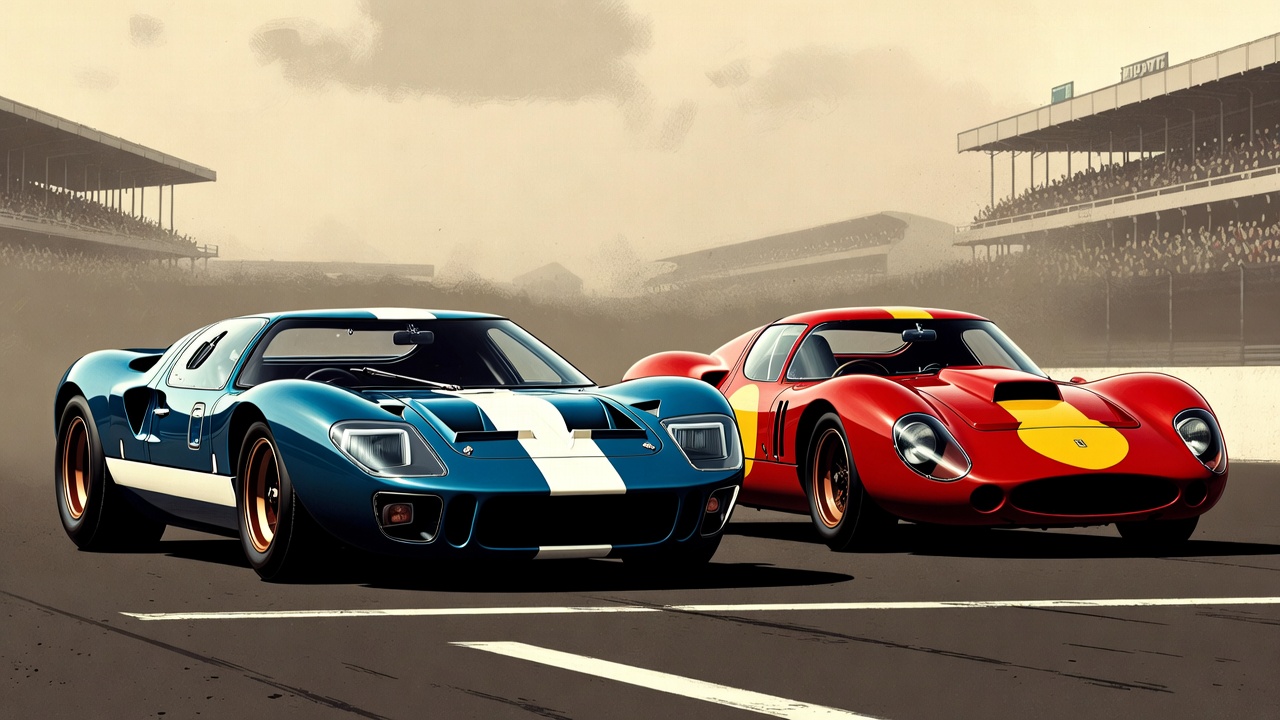
What Does “GT40” Mean? Height, Aerodynamics and Racing Identity
The name Ford GT40 isn’t random—it tells you exactly what the car stands for.
- GT stands for Grand Touring, a term traditionally associated with high-performance cars capable of long-distance driving at high speeds.
- 40 refers to the car’s height: just 40 inches tall.
That 40-inch height was radical for the 1960s. To put it into perspective, many sports cars of that era were significantly taller. By keeping the body extremely low, engineers dramatically reduced aerodynamic drag and lowered the center of gravity. This improved stability at high speeds—especially important on the long straights of the 24 Hours of Le Mans.
The low profile also gave the Ford GT40 its instantly recognizable silhouette. It looked more like a prototype spaceship than a traditional American car. Wide fenders, a long rear deck, and a cockpit that barely rose above the wheels—it was aggressive, functional, and intimidating.
However, the 40-inch height also created compromises. The cabin was extremely tight. Drivers had to recline heavily, and taller drivers often struggled to fit comfortably. But that sacrifice was intentional. Every inch shaved off the body improved airflow and performance.
In many ways, the name Ford GT40 symbolizes the car’s philosophy: performance first, comfort second. It wasn’t designed to impress crowds in a parking lot. It was designed to slice through air at 200 mph for 24 straight hours.
Design Philosophy: Built to Win, Not to Impress
Aerodynamics Over Elegance
The Ford GT40 was not styled for showroom glamour. It was engineered to survive 200+ mph speeds on the Mulsanne Straight for hours at a time.
Key aerodynamic elements included:
- Extremely low frontal area
- Wide track for stability
- Carefully sculpted nose to reduce lift
- Large rear bodywork to manage airflow and cooling
Every contour was wind-tunnel tested and refined. The focus was clear: eliminate instability, improve high-speed control, and reduce mechanical strain.
In endurance racing, beauty is secondary. Efficiency wins.
Driver-Focused Interior
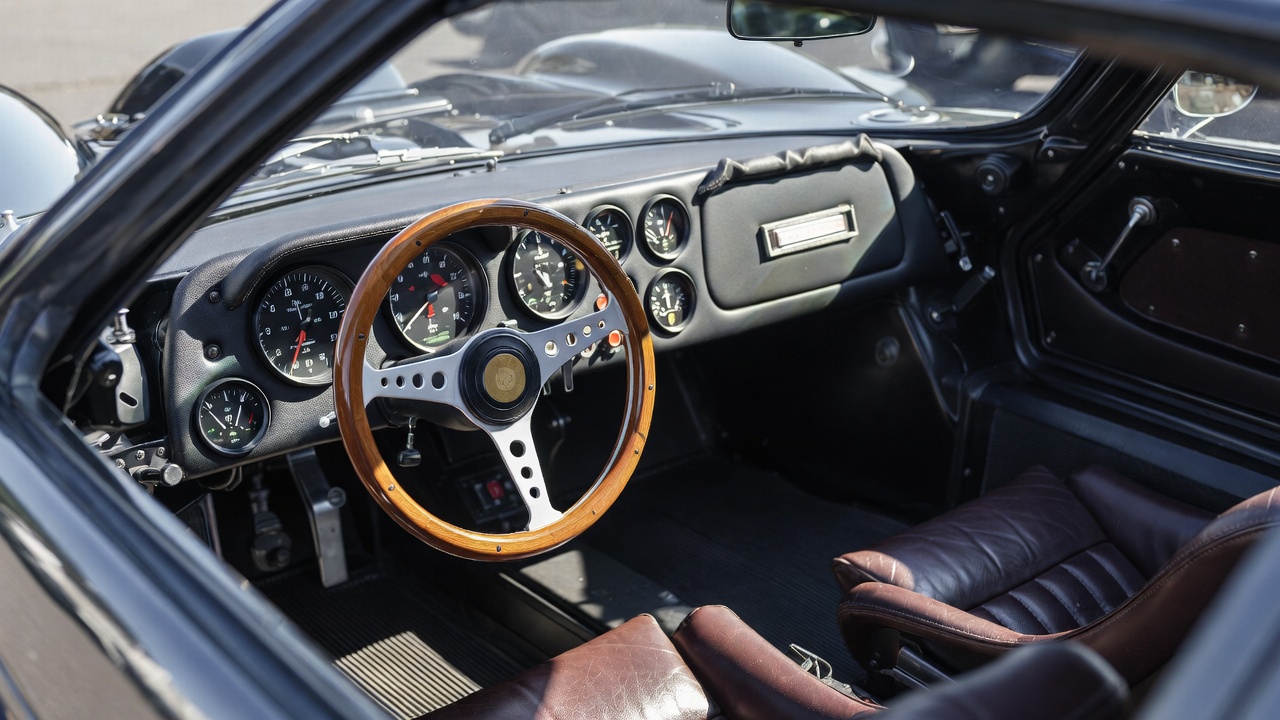
Inside the cockpit, the Ford GT40 was brutally functional.
- Tight, almost claustrophobic cabin
- Fixed seating position (drivers adjusted pedals instead)
- Minimal padding
- Simple analog gauges
- Large central tachometer
The cabin was hot, loud, and unforgiving. But it provided what mattered most—control and visibility. In a 24-hour race, driver confidence is everything.
Engineering the Beast: Power, V8 Performance and Endurance
The Heart of the GT40
The Ford GT40 evolved rapidly during development. Early models used smaller displacement V8 engines, but Ford soon realized more power—and more durability—was required to defeat Ferrari’s V12 machines.
The breakthrough came with the 7.0-liter big-block V8 derived from Ford’s NASCAR program. This engine delivered:
- Massive torque
- Strong straight-line acceleration
- Improved durability under stress
It wasn’t just powerful—it was robust. In endurance racing, finishing is as important as speed.
Built for Endurance Racing
Unlike sprint racing, Le Mans exposes every mechanical weakness. Ford invested millions in development, testing, and structural refinement.
The Ford GT40 was strengthened to handle:
- Continuous redline driving
- Brake wear over long distances
- Cooling demands in summer heat
- Transmission stress under high torque
Ford collaborated with racing experts like Carroll Shelby, whose experience transformed the car from a fast prototype into a reliable weapon.
The Road to Victory: Early Struggles and 1966 Breakthrough
Initial Failures (1964–1965)
Early attempts at Le Mans were disappointing. The Ford GT40 showed incredible speed but suffered from:
- Gearbox failures
- Overheating
- Aerodynamic lift at high speeds
Ferrari continued to win. Critics doubted Ford’s commitment. But behind the scenes, development intensified.
Rather than abandoning the project, Ford doubled its investment. Engineers refined aerodynamics, reinforced transmissions, and improved brake systems.
The lesson? Winning Le Mans required patience, not pride.
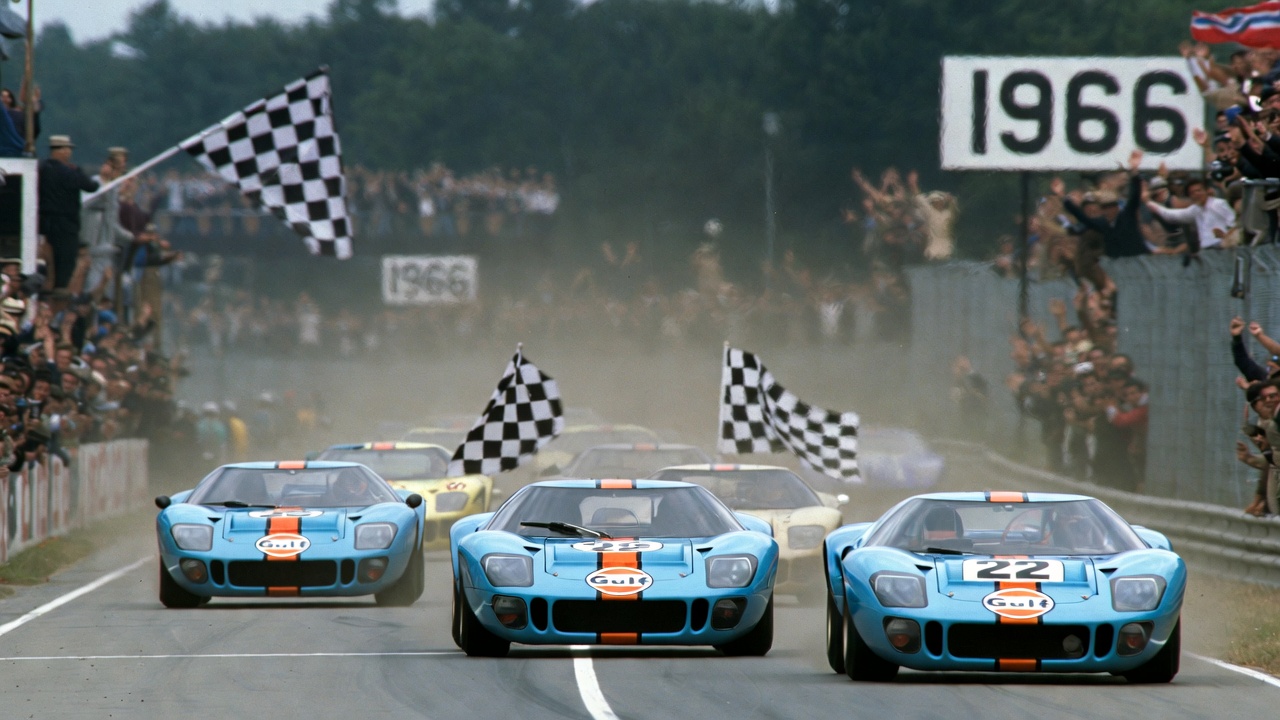
1966: Total Domination at Le Mans
In 1966, everything changed.
At the 24 Hours of Le Mans, the Ford GT40 achieved a historic 1-2-3 finish. Ferrari was defeated decisively. It was not a narrow victory—it was domination.
The sight of three Ford GT40s crossing the finish line together became one of the most iconic images in racing history.
It wasn’t just a win. It was revenge, redemption, and proof of American engineering excellence.
Ford GT40’s Le Mans Legacy: Four Consecutive Wins
The GT40 didn’t stop at one triumph. It went on to win Le Mans four consecutive times:
- 1966
- 1967
- 1968
- 1969
Few race cars in history have achieved such sustained dominance at the world’s toughest endurance event.
These victories proved:
- American manufacturers could win on European soil
- Development and data mattered more than legacy
- Teamwork and investment overcome tradition
The GT40 transformed endurance racing strategy for years to come.
Why These Wins Were So Important
These victories proved that:
- American manufacturers could compete globally
- Engineering mattered more than tradition
- Innovation beats reputation
The Ford GT40 changed how racing teams approached endurance motorsport.
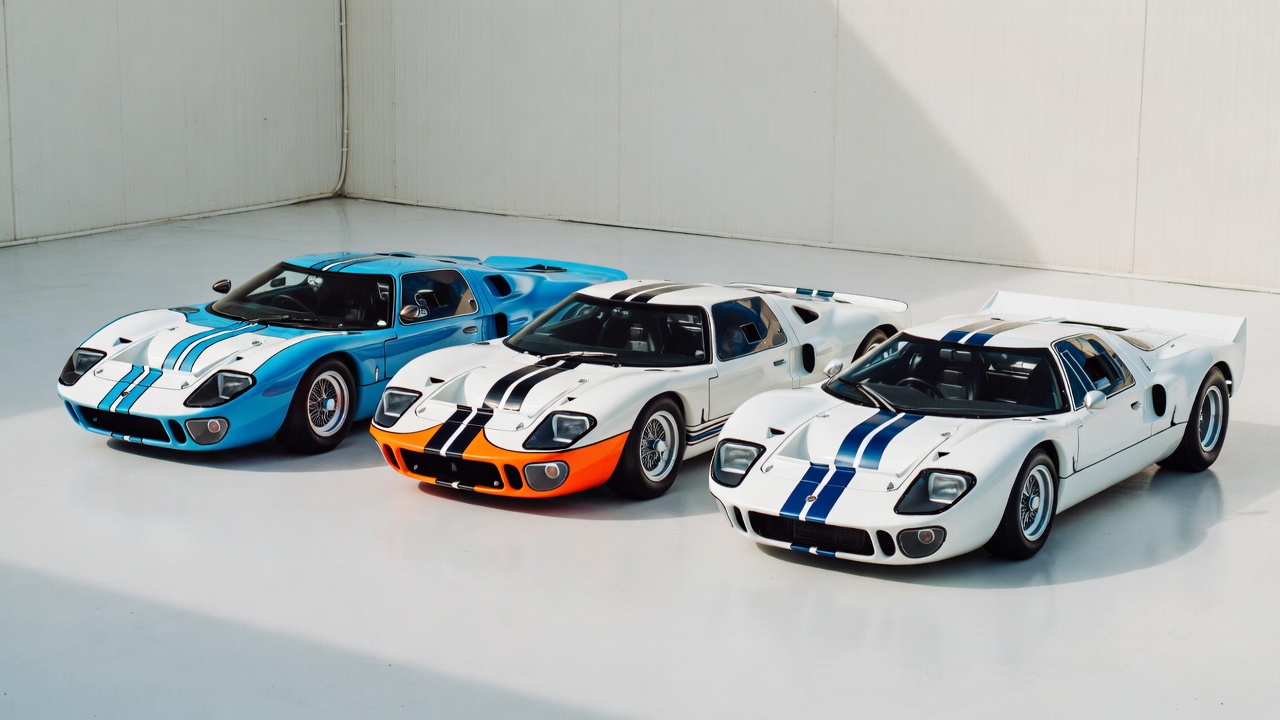
Different Versions of the GT40: Mk I, Mk II and Mk IV
Ford GT40 Mk I
- Original competition version
- Lightweight chassis
- Small-block V8
- Balanced and agile
Ford GT40 Mk II
- 7.0L big-block V8
- Reinforced transmission
- Improved cooling
- Key to the 1966 victory
Ford GT40 Mk IV
- Fully American-built
- Honeycomb aluminum chassis
- Advanced aerodynamics
- Won Le Mans in 1967
Each version represented evolution under pressure. The GT40 was not static—it improved constantly, race after race.
How the Ford GT40 Influenced Modern Supercars
The impact of the Ford GT40 extends far beyond the 1960s.
Its influence can be seen in:
- Modern endurance race car design
- Low-profile supercar aerodynamics
- The philosophy of function-first engineering
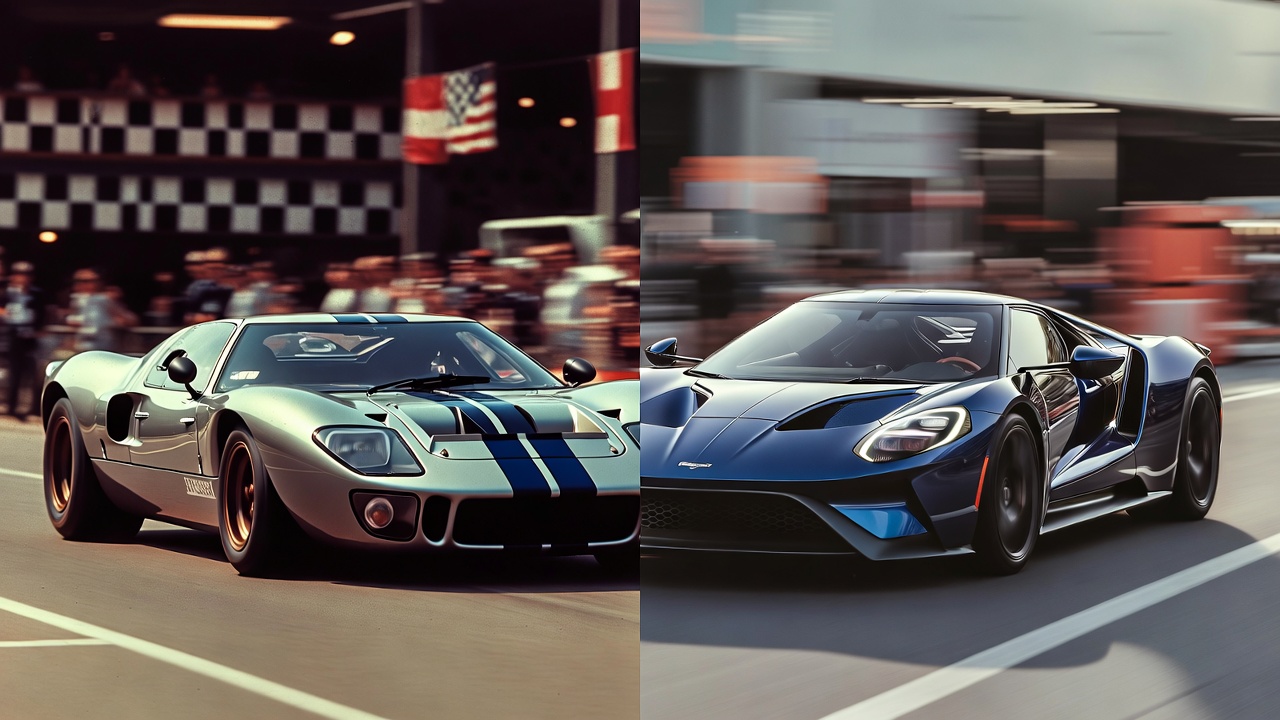
Even Ford’s modern GT models are spiritual successors to this racing icon. The GT40’s DNA lives on. Its philosophy of low-slung aerodynamics, mid-engine balance, and endurance-focused engineering directly influenced modern supercars.
Ford later honored this legacy with the Ford GT and the newer Ford GT, both of which were designed as spiritual successors to the original Le Mans hero.
The 2017 model even returned to Le Mans and won its class—exactly 50 years after the 1966 victory. History came full circle.
Real-World Driving Experience: What Is It Like to Drive a GT40?
Driving a Ford GT40 is nothing like driving a modern supercar. There are no driver aids, no traction control systems, no digital dashboards—just raw mechanical feedback.
Getting In
Entering the car itself is an experience. The doors cut into the roofline, requiring drivers to carefully lower themselves into the tight cockpit. Once inside, visibility forward is surprisingly good, but rear visibility is limited. The seating position is reclined and race-focused.
The Engine Sound and Feel
Turn the key, and the V8 roars to life with an aggressive, mechanical growl. The engine doesn’t just hum—it shakes the cabin. The vibration, heat, and noise remind you immediately that this is a race-bred machine.
Acceleration is brutal, especially in the big-block versions. There’s massive torque available almost instantly. On open roads, the car feels alive, urgent, and demanding of respect.
Steering and Handling
There is no power steering. At low speeds, the wheel feels heavy and physical. But once moving, the steering becomes sharp and communicative. You feel every bump, every texture of the road surface.
The low center of gravity keeps the car planted through corners, but it requires skill. Push too hard without experience, and the GT40 can bite back. It rewards precision and confidence.
Comfort and Practicality
Let’s be honest—the Ford GT40 is not comfortable. The cabin gets hot. Noise levels are high. Long drives can be physically tiring. There’s minimal storage and almost no modern convenience features.
But comfort was never the goal.
The real-world driving experience is about connection. It’s about feeling the engine, hearing the gearbox, and sensing the road directly through the chassis. It’s raw, mechanical, and unforgettable.
A Machine That Demands Respect
Unlike modern performance cars that make speed feel easy, the GT40 makes speed feel earned. It demands attention, skill, and mechanical sympathy. That’s part of its charm.
Driving one isn’t just transportation—it’s stepping into motorsport history.
Why the Ford GT40 Is Still Loved Today
Decades later, the Ford GT40 continues to captivate because it represents more than horsepower.
It symbolizes:
- An underdog challenging an established dynasty
- Corporate pride turned into engineering excellence
- The power of persistence after failure
- A perfect balance of aggression and precision
Collectors value it for rarity. Engineers respect it for innovation. Racers admire it for endurance dominance. Fans love it for the story.
The Ford GT40 wasn’t built for comfort. It wasn’t built for mass production. It was built with one clear purpose: to win the hardest race in the world.
And it did—again and again.
That’s why it still matters today.
Conclusion: A Legend That Refuses to Fade
The Ford GT40 is not remembered just because it looks dramatic or sounds powerful—it is remembered because its achievements are measurable, documented, and unmatched in motorsport history.
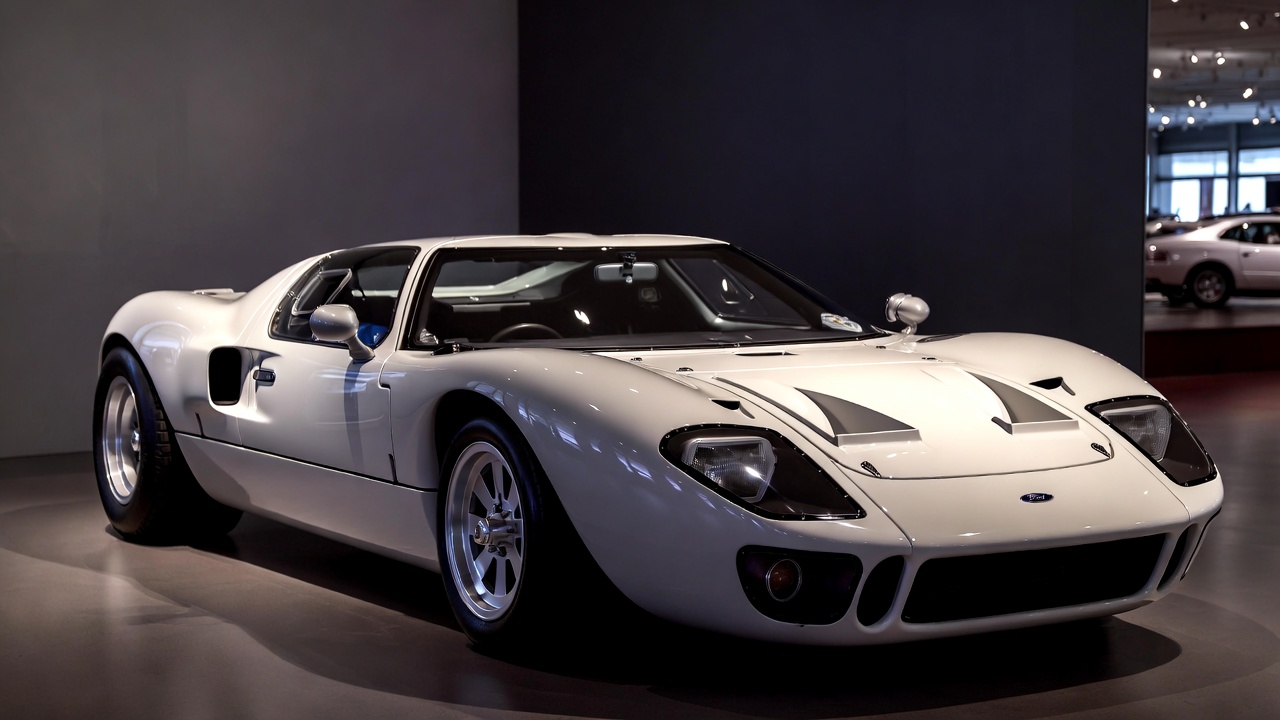
From 1966 to 1969, the GT40 achieved four consecutive overall victories at the 24 Hours of Le Mans, a feat that permanently altered endurance racing. In 1966 alone, Ford secured a historic 1–2–3 finish, marking the first time an American manufacturer had ever won Le Mans outright. This wasn’t a symbolic win—it was total domination.
Technically, the GT40 also pushed boundaries. Its mid-engine layout, advanced aerodynamics, and use of high-displacement V8 engines proved that raw power could coexist with endurance reliability. The later GT40 Mk II and Mk IV models produced over 485 horsepower, allowing sustained speeds above 200 mph on the Mulsanne Straight, something few cars of that era could survive, let alone repeat for 24 hours.
Beyond racing, the GT40 reshaped automotive culture:
- It ended Ferrari’s Le Mans dominance, which had lasted six straight years
- It established Ford as a serious global performance brand, not just a mass-market manufacturer
- It influenced the design philosophy of modern endurance prototypes and supercars
- It directly inspired the 2005–2006 Ford GT and the modern Ford GT (2017–2022), both of which paid homage to the original GT40’s proportions and racing DNA
Today, original Ford GT40 models are among the most valuable race cars in the world, often selling for multi-million-dollar figures at auctions. Museums, collectors, and historians recognize it not as a relic, but as a turning point in racing engineering.
In simple terms, the Ford GT40 succeeded because it combined:
- Strategic intent
- Engineering innovation
- Racing discipline
- And relentless refinement
That combination is why, decades later, the GT40 still commands respect—not just nostalgia.
If this story fired up your love for classic performance machines, share this post with fellow car enthusiasts, leave a comment with your favorite GT40 fact, or explore our other deep dives into legendary race cars that shaped automotive history.
Frequently Asked Questions (FAQ) For Ford GT40
1. What is the Ford GT40 best known for?
Ans. The Ford GT40 is best known for winning the 24 Hours of Le Mans four times in a row from 1966 to 1969.
2. Why is it called GT40?
Ans. The name comes from its height—just 40 inches tall—which helped improve aerodynamics and stability.
3. Was the Ford GT40 street legal?
Ans. Some versions were made road-legal, but most were built specifically for racing.
4. Who designed the Ford GT40?
Ans. It was developed through collaboration between Ford engineers, British designers, and racing experts like Carroll Shelby.
5. What engine did the GT40 use?
Ans. Different versions used V8 engines, including a powerful 7.0L big-block V8.
6. How fast was the Ford GT40?
Ans. Top speeds exceeded 200 mph, depending on the version and gearing.
7. Why did Ford build the GT40?
Ans. Ford built it to defeat Ferrari at Le Mans after a failed acquisition deal.
8. Is the Ford GT40 rare today?
Ans. Yes, original models are extremely rare and valuable, often selling for millions.
9. What makes the GT40 special compared to other race cars?
Ans. Its combination of reliability, power, and endurance dominance sets it apart.
10. Did the GT40 influence modern Ford GT models?
Ans. Absolutely. Modern Ford GT cars directly draw inspiration from the GT40’s design and philosophy.
11. Can you still see a Ford GT40 in races today?
Ans. Some restored models appear in historic racing events and exhibitions.
12. Is the Ford GT40 considered a supercar?
Ans. Yes, it’s widely regarded as one of the earliest true American supercars.