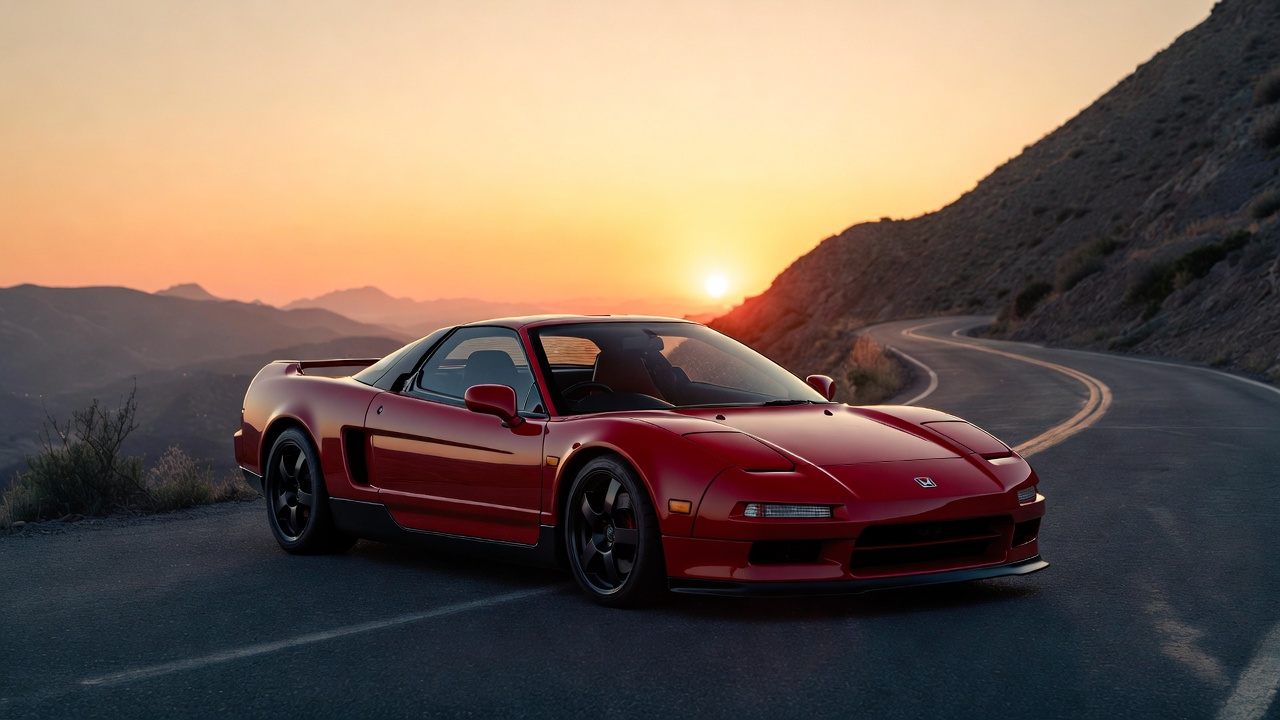
When the Honda NSX debuted in 1990, it didn’t just enter the supercar segment—it disrupted it. At a time when exotic sports cars were admired more for their drama than their durability, Honda introduced a machine that challenged long-standing beliefs about what a supercar should be. Until then, owning a supercar often meant living with unreliable electronics, heavy clutches, poor visibility, and frequent maintenance headaches. The NSX changed all of that.
Developed during Honda’s dominant era in Formula 1, the NSX was built with a clear mission: combine race-inspired performance with everyday usability. It became the world’s first mass-produced car with an all-aluminum monocoque chassis, a groundbreaking achievement that reduced weight while increasing rigidity. Even more impressive, the NSX was engineered to be driven confidently—not feared—by ordinary drivers.
What truly set the NSX apart was its philosophy. Instead of chasing extreme horsepower numbers, Honda focused on balance, reliability, and driver confidence. With direct input from Formula 1 legend Ayrton Senna, the NSX received chassis tuning that elevated its handling to world-class levels. The result was a supercar that could outperform rivals on real roads, not just on paper.
Decades later, the NSX remains one of the most influential performance cars ever made—respected not only for its speed, but for redefining how supercars are engineered, built, and experienced.
The Birth of the Honda NSX Supercar
Why Honda Decided to Build a Supercar
In the late 1980s, Honda had already earned a reputation for reliability and engineering excellence. But the company wanted more—it wanted to challenge European supercar giants on their own turf.
Honda’s goal was simple yet bold:
- Build a supercar that could compete with Ferrari
- Make it reliable enough for daily use
- Engineer it with Formula 1-level precision
The result was the New Sportscar experimental, better known as the NSX.
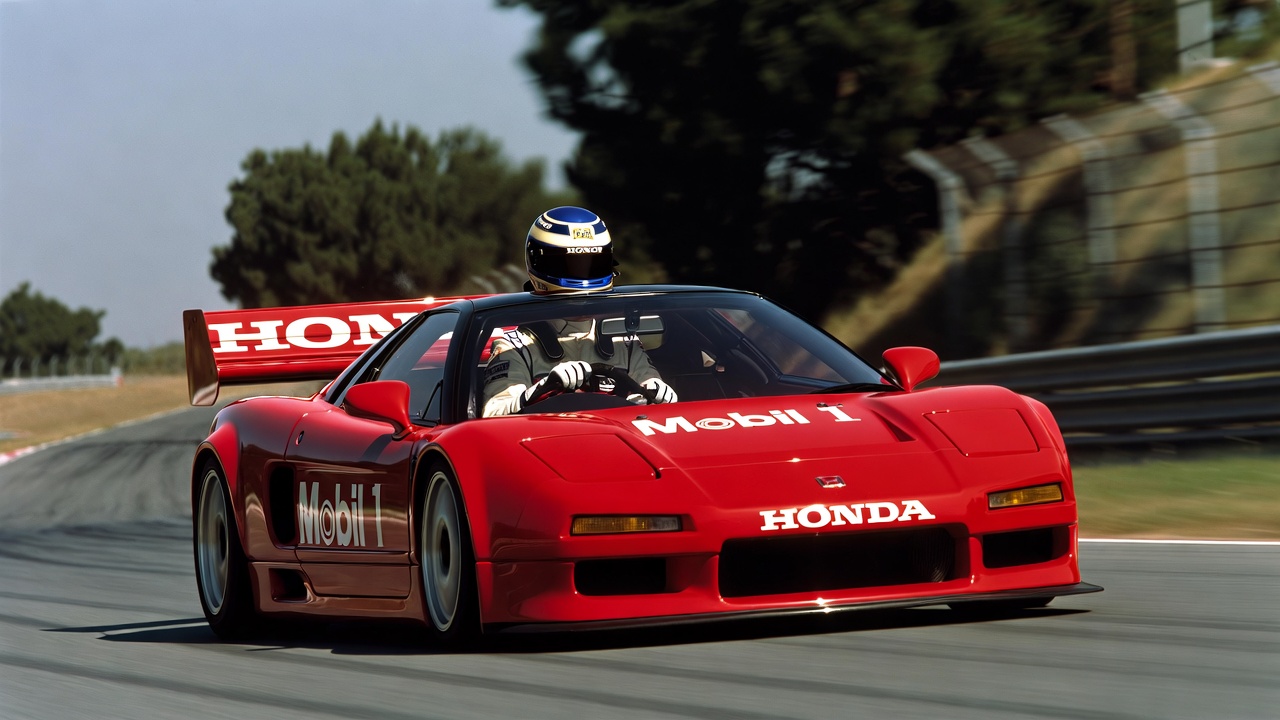
Ayrton Senna’s Influence on Honda NSX Engineering
One of the most fascinating facts about the Honda NSX is its connection to Ayrton Senna, one of the greatest Formula 1 drivers of all time.
Senna worked closely with Honda engineers during development and reportedly pushed them to stiffen the chassis after testing early prototypes. His feedback helped transform the NSX from a good sports car into a truly exceptional one.
Design Philosophy of the Honda NSX
Inspired by Fighter Jets
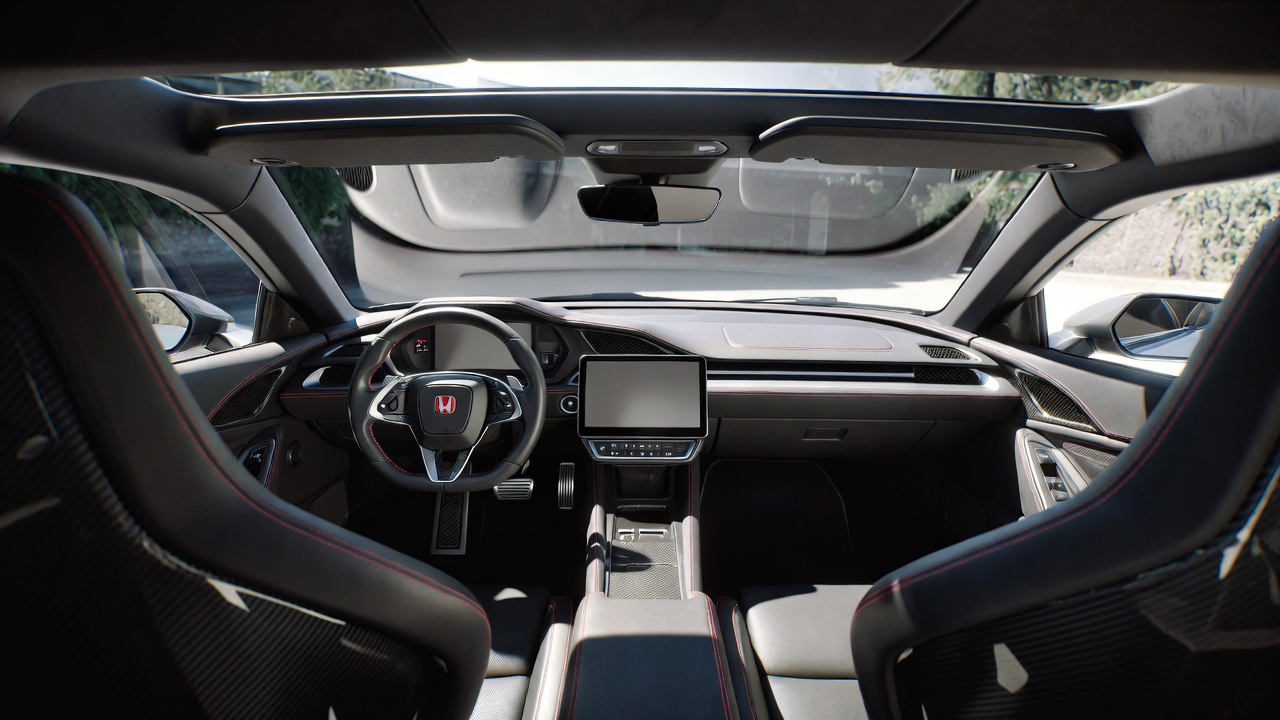
The design of the NSX was inspired by the F-16 fighter jet cockpit, which is why the car features:
- A low dashboard
- Excellent outward visibility
- A driver-focused cabin
This was a radical idea at the time, as most supercars had poor visibility and cramped interiors.
Timeless Exterior Styling
Rather than aggressive angles or exaggerated curves, the NSX used:
- Clean lines
- Balanced proportions
- Aerodynamic efficiency
Even decades later, the original NSX still looks modern and purposeful.
Engineering Innovations: All-Aluminum Chassis & Mid-Engine Layout
World’s First All-Aluminum Production Supercar
One of the biggest innovations of the Honda NSX was its all-aluminum monocoque chassis and body.
Why This Mattered
- Reduced weight significantly
- Improved rigidity
- Enhanced handling and performance
At the time, this was unheard of in mass production.
Mid-Engine Layout for Perfect Balance
The NSX used a mid-engine, rear-wheel-drive layout, providing:
- Near-perfect weight distribution
- Excellent cornering stability
- Predictable handling
This layout made the NSX both thrilling and forgiving to drive.
Honda NSX Engine and Performance Specifications
The Legendary V6 Engine
The original Honda NSX was powered by a 3.0-liter naturally aspirated V6, later upgraded to a 3.2-liter V6.
Key Engine Features
- VTEC variable valve timing
- High-revving nature
- Linear power delivery
This engine didn’t rely on turbochargers—it relied on precision and balance.
Performance Numbers (Original NSX)
- 0–60 mph: ~5 seconds
- Top Speed: ~168 mph
- Redline: 8,000+ RPM
While modern supercars are faster on paper, the NSX delivered performance that felt accessible and confidence-inspiring.
Driving Experience: What Makes the Honda NSX Special
A Supercar You Could Drive Every Day
Unlike many exotic cars, the NSX offered:
- Smooth clutch operation
- Comfortable seating
- Excellent reliability
You didn’t need to be a professional racer to enjoy it.
Precision Handling
Thanks to:
- Double-wishbone suspension
- Lightweight construction
- Low center of gravity
The NSX delivered surgical steering feedback and incredible road feel.
Honda NSX vs Ferrari: Supercar Industry Disruption
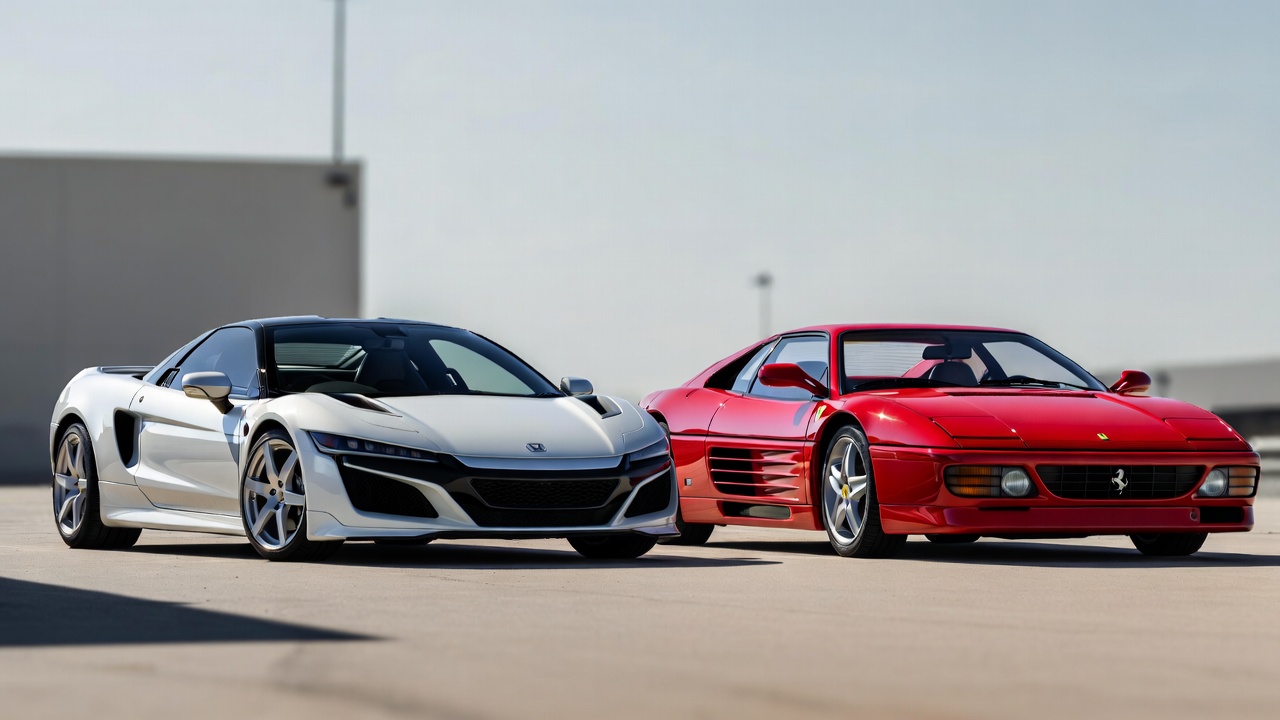
When the Honda NSX launched, it was often compared to the Ferrari 348.
Why the NSX Shocked the Industry
- More reliable than Ferrari
- Easier to maintain
- Better build quality
- Comparable performance
Even Ferrari reportedly improved their quality control after the NSX’s release.
Evolution of the Honda NSX
Facelifts and Updates
Over the years, Honda made subtle improvements:
- Engine displacement increase
- Six-speed manual transmission
- Fixed headlights (later models)
- Improved suspension tuning
Honda focused on refinement rather than radical redesigns.
The Second-Generation Honda NSX Hybrid Supercar
A Hybrid Supercar for the Modern Era
The modern NSX (introduced in 2016) embraced new technology:
- Twin-turbo V6 engine
- Three electric motors
- All-wheel drive system
This made the new NSX:
- Faster
- More complex
- Technologically advanced
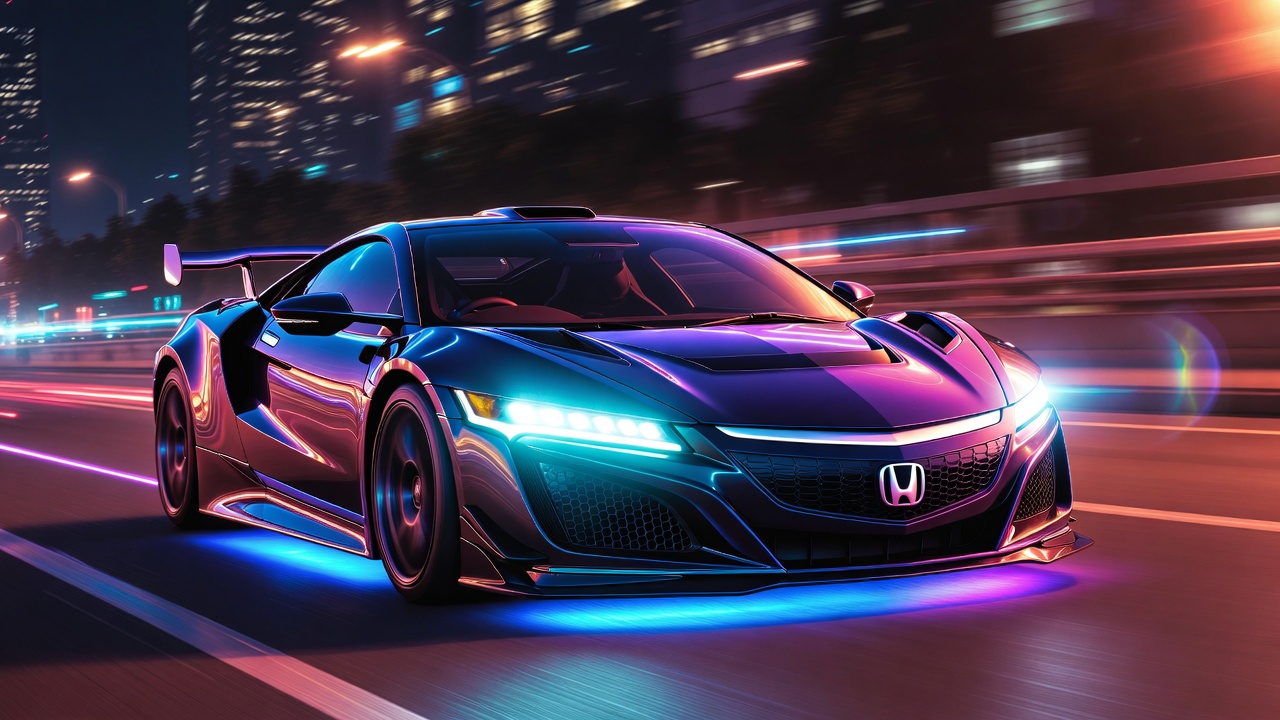
Performance Highlights (New NSX)
- Total Power: ~573 hp
- 0–60 mph: ~2.9 seconds
- Advanced torque vectoring
It blended electrification with performance in a way few cars had done before.
Honda NSX Reliability: A Game-Changer in Supercars
One of the biggest reasons the NSX is legendary is reliability.
Why Reliability Matters
Supercars often:
- Break down frequently
- Require expensive maintenance
- Are impractical for daily use
The NSX broke that stereotype entirely.
Owners regularly report:
- High mileage with minimal issues
- Low maintenance compared to rivals
- Exceptional build quality
Cultural Impact of the Honda NSX
Motorsports and Media
The NSX became a favorite in:
- Racing games
- Movies
- Automotive journalism
It symbolized Japanese engineering excellence and challenged Western dominance.
Collector Status Today
Original NSX models are now:
- Highly collectible
- Increasing in value
- Appreciated by enthusiasts worldwide
Why the Honda NSX Still Matters Today
The NSX wasn’t just a car—it was a statement.
It proved that:
- Innovation beats tradition
- Engineering matters more than branding
- A supercar can be both thrilling and practical
Modern performance cars still borrow ideas first perfected by the NSX.
Conclusion For Honda NSX
The Honda NSX is more than a legendary sports car—it is a turning point in automotive history. By introducing technologies such as an all-aluminum body, VTEC-powered naturally aspirated V6, and a driver-focused mid-engine layout, Honda proved that innovation could rival—and even surpass—tradition. The NSX forced established European manufacturers to rethink build quality, ergonomics, and reliability, leaving a lasting impact across the global supercar industry.
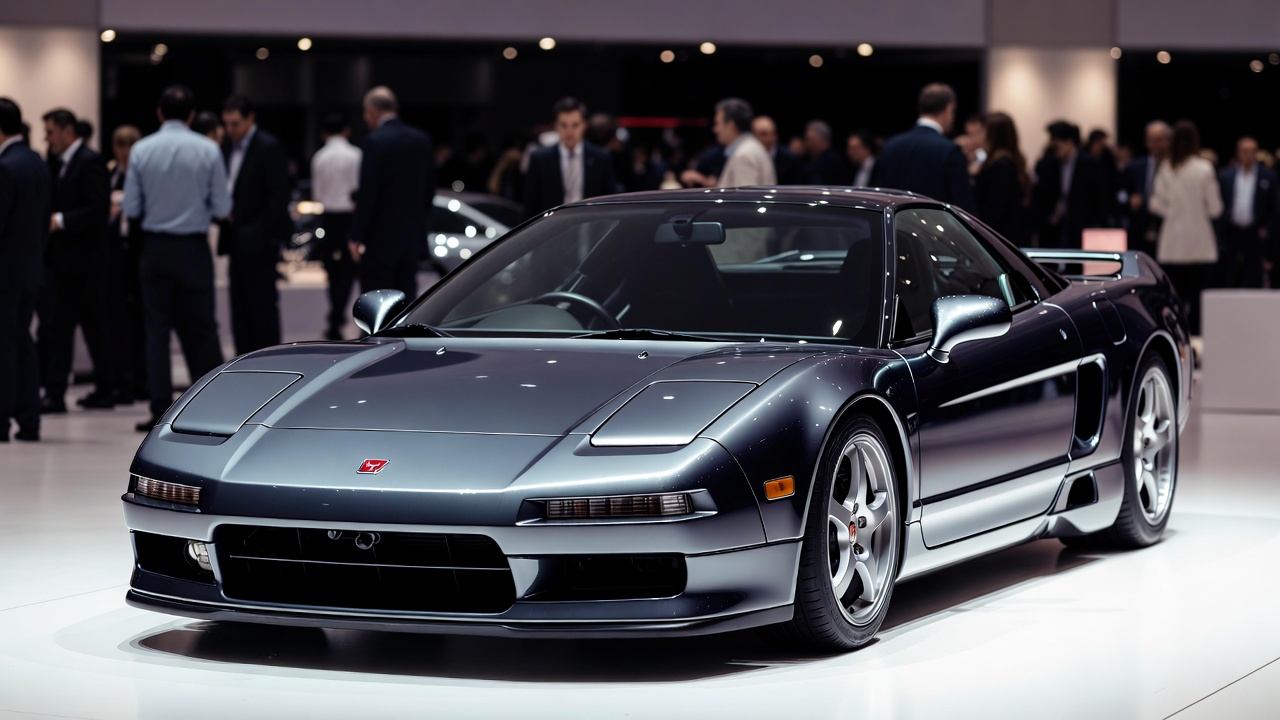
What makes the NSX truly special is its balance. It delivered genuine supercar performance while remaining approachable, dependable, and surprisingly practical. Owners could drive it daily, track it on weekends, and trust it mechanically—something nearly unheard of among exotic cars of its era. This philosophy carried forward into the second-generation hybrid NSX, which blended electrification with performance long before it became an industry trend.
Today, the NSX stands as a benchmark for intelligent engineering. Its rising collector value, strong enthusiast following, and continued influence on modern performance vehicles prove that it wasn’t just ahead of its time—it helped define the future of supercars.
If you enjoyed learning about the Honda NSX, share this article with fellow car enthusiasts, leave a comment with your favorite NSX generation, or explore our other deep-dive posts on legendary performance cars that shaped automotive history 🚗✨
Frequently Asked Questions (FAQ) For Honda NSX
1. What does NSX stand for in Honda NSX?
Ans. NSX stands for New Sportscar experimental, highlighting Honda’s innovative approach.
2. Is the Honda NSX a supercar?
Ans. Yes, the Honda NSX is widely considered a supercar due to its performance, design, and engineering.
3. Who helped develop the Honda NSX?
Ans. Formula 1 legend Ayrton Senna played a key role in chassis development.
4. Why is the Honda NSX so reliable?
Ans. Honda applied its strict engineering standards and quality control to supercar development.
5. What engine does the original Honda NSX use?
Ans. A naturally aspirated V6 engine with VTEC technology.
6. How fast is the Honda NSX?
Ans. The original NSX reaches around 168 mph, while the modern NSX hits 60 mph in under 3 seconds.
7. Is the Honda NSX good for daily driving?
Ans. Yes, it was designed to be comfortable and easy to drive daily.
8. How many generations of Honda NSX exist?
Ans. There are two main generations: the original (1990–2005) and the modern hybrid NSX.
9. Why did Ferrari take the NSX seriously?
Ans. Because it exposed weaknesses in reliability and build quality among European supercars.
10. Is the Honda NSX a good investment?
Ans. Original models are appreciating in value and are considered solid collector cars.
11. Does the new Honda NSX use electric power?
Ans. Yes, it uses a hybrid system with multiple electric motors.
12. Why is the Honda NSX considered iconic?
Ans. It combined supercar performance with everyday usability—something revolutionary at the time.