Over the past few years, the Indian car market has changed a lot. SUVs have become extremely popular because they look big, bold, and offer a high driving position. Many people now automatically think of buying an SUV when upgrading their car.
But does that mean sedans are no longer a good choice?
Not really.
The Hyundai Verna facelift proves that sedans still have a strong identity and purpose. In fact, this new Verna feels more modern, more powerful, and more advanced than ever before.
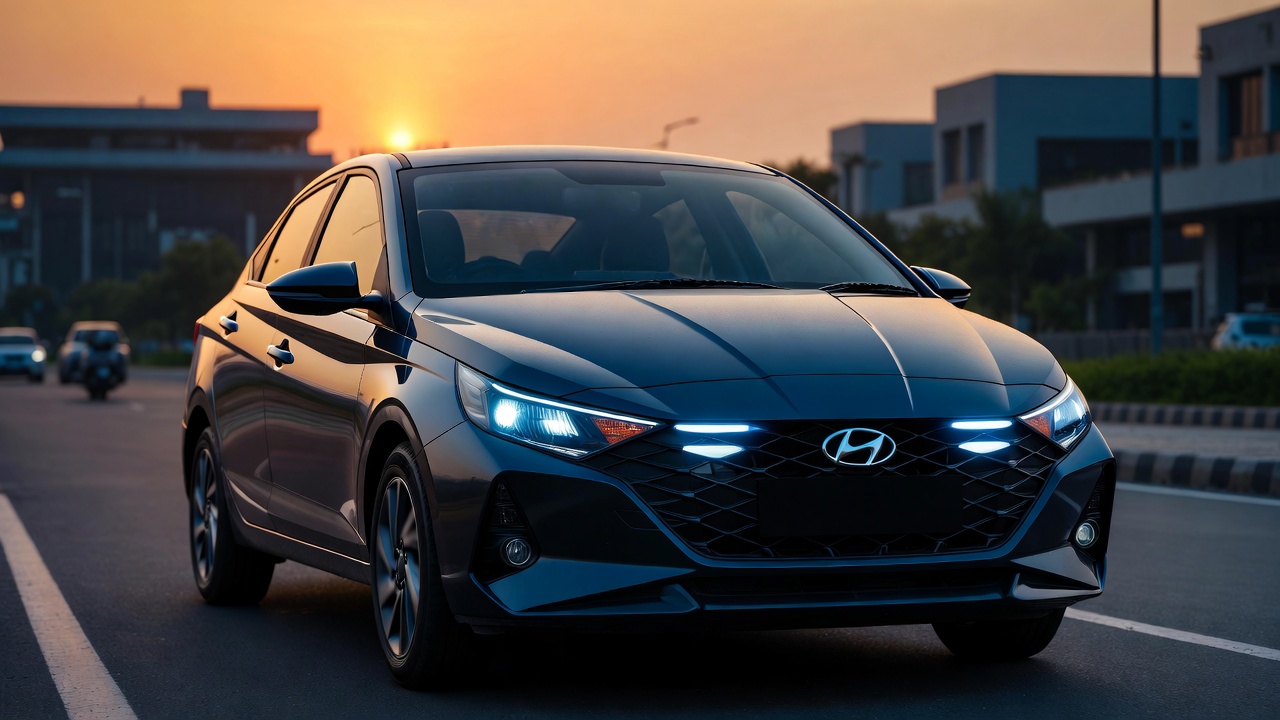
This isn’t just a small cosmetic update. Hyundai has redesigned the car in a way that makes it look futuristic and different from anything else in the segment. The front design is bold. The connected lights make it look premium. And the overall shape feels sleek and sporty.
Step inside, and you immediately notice the change. The cabin feels more premium, more digital, and more spacious. The twin-screen setup gives it a high-tech vibe. The materials feel better. The seats are comfortable. It feels like a car from a higher segment.
And then comes the performance.
With the turbo petrol engine option, the Verna facelift is not just about comfort — it’s about excitement too. It offers strong acceleration, smooth driving, and a stable highway experience.
At the same time, Hyundai has focused heavily on safety. Features like multiple airbags and ADAS technology show that the company is thinking about modern buyers who want more protection on the road.
So, who is this car for?
It’s for someone who still enjoys the driving feel of a sedan.
It’s for families who want comfort and space.
It’s for professionals who want a stylish and premium-looking car.
And it’s for drivers who want performance without moving to a more expensive segment.
The Hyundai Verna facelift is not trying to copy SUVs. Instead, it is trying to remind buyers why sedans are still relevant — and in many ways, better for certain needs.
Now let’s look deeper into what makes this car stand out in 2026.
Hyundai Verna Facelift Design & Exterior
The first thing you notice about the Hyundai Verna facelift is its front profile. It’s unlike anything else in the segment.
A Face That Commands Attention
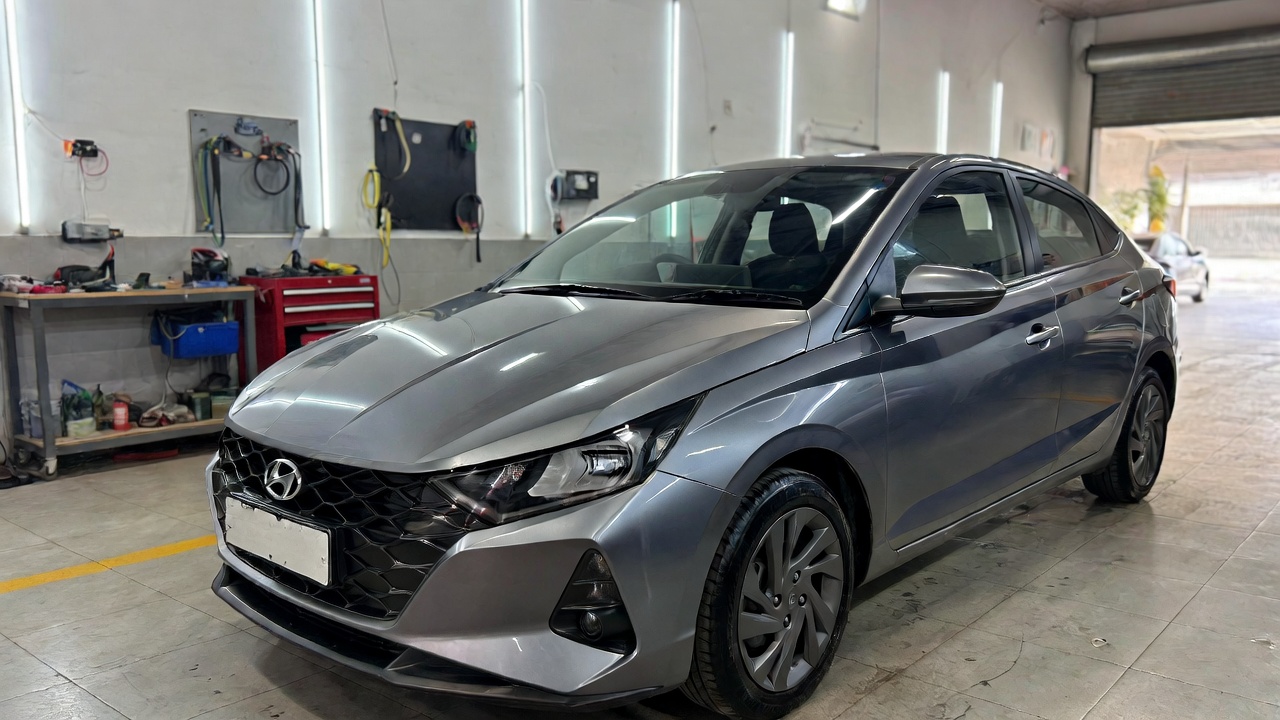
The wide parametric grille is gone. In its place, Hyundai has introduced a sleek, full-width LED light bar that stretches across the nose. It gives the Verna a futuristic EV-inspired vibe — almost concept-car-like.
The split headlamp setup adds drama. The daytime running lights sit high and sharp, while the main LED headlamps are positioned lower in sculpted housings.
It looks modern. It looks international. And yes, it looks expensive.
Side Profile: Coupe-Like Elegance
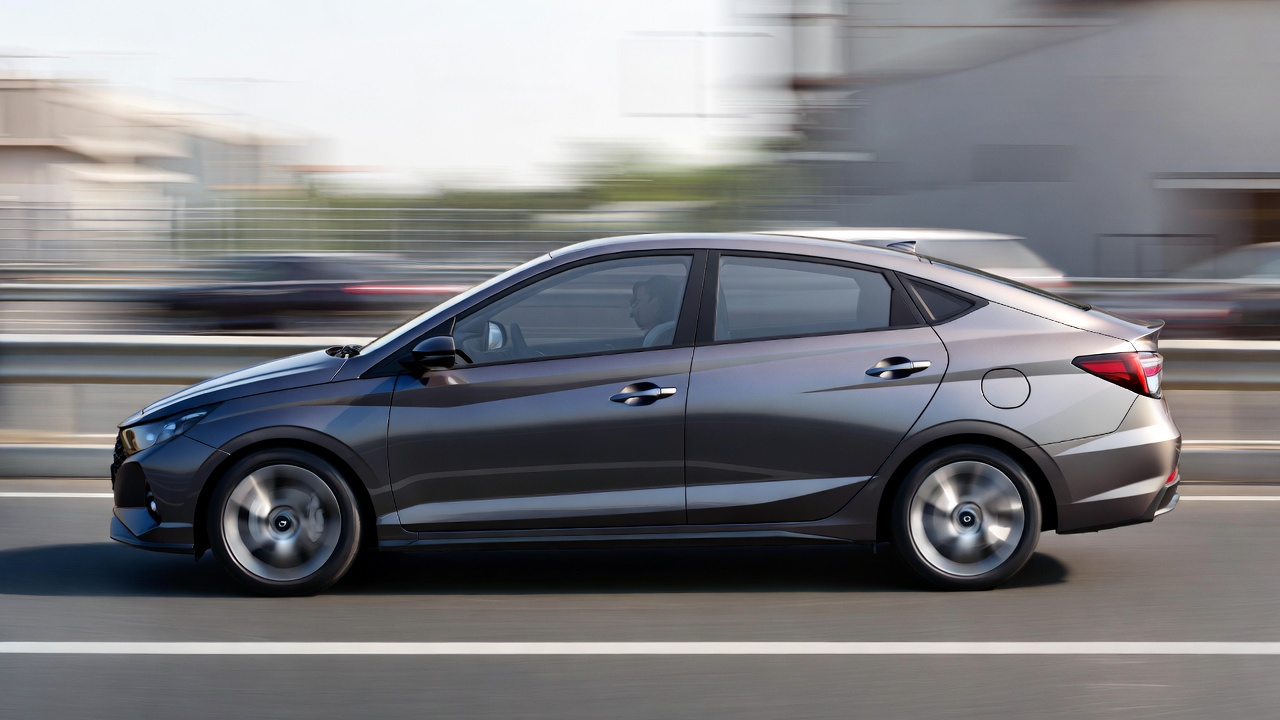
Move to the side and you’ll notice the flowing character lines. The sloping roofline gives it a subtle fastback feel. It’s not a coupe, but it carries that energy.
The larger dimensions add to the road presence. The car is longer and wider than before, giving it a planted stance.
The alloy wheel designs vary across variants, but the top trims get stylish dual-tone alloys that elevate the premium quotient.
Rear Design: Light Bar Drama Continues
At the back, the connected LED tail lamps mirror the front lighting theme. The rear feels wide and muscular.
The bumper design is sharp and layered. It doesn’t look conservative — and that’s intentional.
Love it or debate it, the Verna facelift definitely sparks conversation.
Hyundai Verna Facelift Interior & Features
Step inside and the story changes from aggressive to elegant.
The cabin feels far more premium than the previous generation.
Dual-Screen Layout
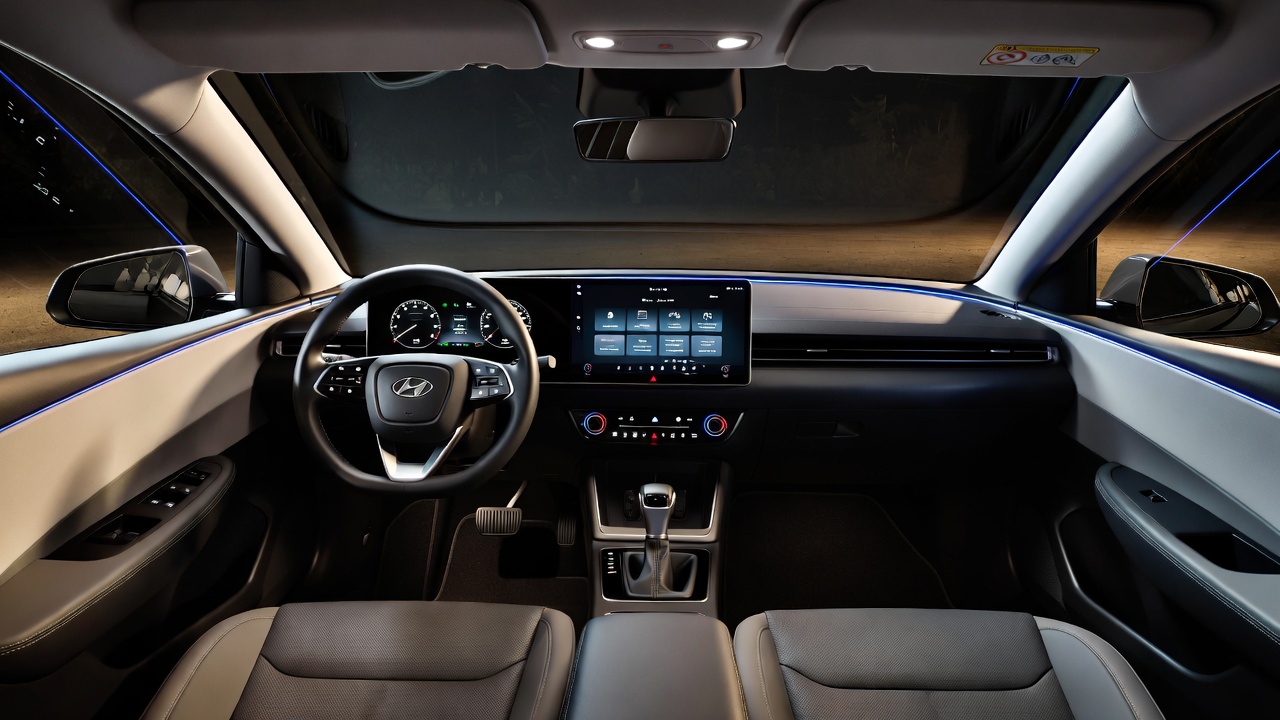
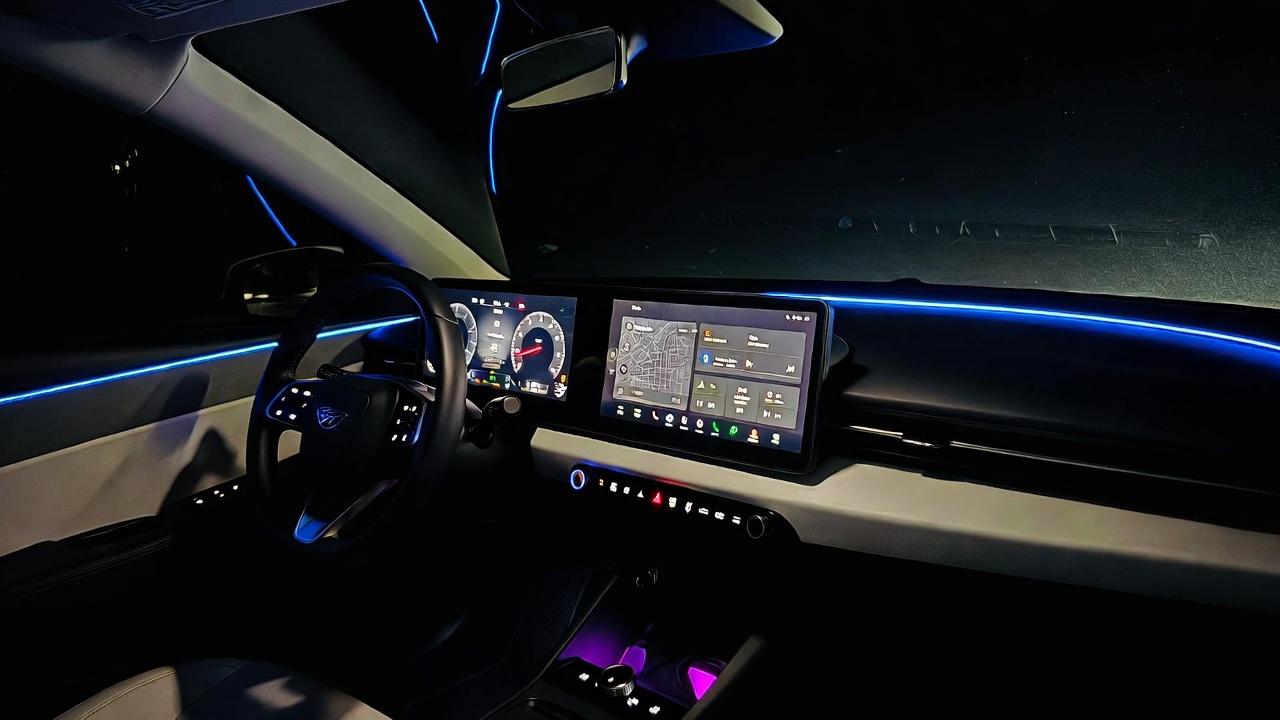
The highlight is the twin integrated screens — one for the digital instrument cluster and one for infotainment. They sit under a single glass panel, giving the dashboard a clean, tech-forward appearance.
Soft-touch materials, layered textures, and ambient lighting enhance the experience.
Space & Comfort
Because of its increased dimensions, rear seat space is generous. Legroom is impressive, and the seat cushioning is supportive for long drives.
Ventilated seats in the front are a blessing during Indian summers.
Rear passengers get AC vents, charging ports, and ample headroom despite the sloping roofline.
It feels like a segment above.
Hyundai Verna Facelift Engine & Performance
Now comes the exciting part.
The Hyundai Verna facelift offers two petrol engine options:
No diesel this time.
1.5L Naturally Aspirated Petrol
This engine is smooth and refined. It’s perfect for city commuting.
Power delivery is linear, and the CVT gearbox keeps things comfortable. It’s not thrilling, but it’s dependable.
1.5L Turbo Petrol: The Real Star
This is where things get serious.
The turbo engine produces segment-leading power. It feels energetic, especially in the mid-range.
Acceleration is brisk. Overtakes feel effortless. The DCT gearbox shifts quickly and keeps the engine in its sweet spot.
If you enjoy spirited driving, this variant delivers genuine excitement.
It’s arguably one of the most powerful sedans in its class.
Hyundai Verna Facelift Mileage & Fuel Efficiency
Performance usually comes at a cost — especially when turbocharged engines are involved.
But the Hyundai Verna facelift manages to strike a surprisingly practical balance between power and efficiency.
Claimed Mileage Figures
- 1.5L Naturally Aspirated Petrol – Around 18–19 km/l
- 1.5L Turbo Petrol – Around 20 km/l (manual slightly higher than DCT)
Now here’s the interesting part.
The turbo engine is powerful — genuinely powerful for the segment — yet it doesn’t punish you at the fuel pump if driven sensibly.
Real-World Expectations
In city traffic:
- Expect around 13–15 km/l depending on traffic density.
- CVT offers smoother urban mileage.
- DCT may feel slightly thirstier in bumper-to-bumper situations.
On highways:
- 17–20 km/l is achievable with relaxed cruising.
- Turbo variants shine on long drives, especially with cruise control engaged.
What really stands out is that you’re getting strong acceleration and respectable efficiency in the same package.
For buyers who want excitement without sacrificing practicality, that’s a major win.
Hyundai Verna Facelift Variants & Pricing
Hyundai has smartly structured the Hyundai Verna facelift lineup to appeal to different types of buyers.
Available Variants:
- EX – Entry-level, essential features
- S – Value-focused with more convenience
- SX – Balanced package with premium touches
- SX(O) – Fully loaded with ADAS and turbo performance
Pricing Strategy
The Verna is positioned competitively in the midsize sedan segment.
Entry-level variants are priced attractively to pull in buyers upgrading from premium hatchbacks.
Mid variants offer the best value-for-money equation.
Top-end turbo SX(O) variants move into premium territory — but they justify it with:
- ADAS features
- Bose sound system
- Dual-screen layout
- Ventilated seats
- Advanced safety tech
Hyundai has clearly avoided overpricing the base model while allowing enthusiasts to go fully loaded if they want.
This layered strategy ensures the Verna appeals to both practical buyers and performance seekers.
Hyundai Verna Facelift Safety & ADAS Features
Safety is no longer a bonus feature — it’s a priority.
The Hyundai Verna facelift takes this seriously.
Standard & Core Safety Features
- 6 Airbags (available across most variants)
- ABS with EBD
- Electronic Stability Control
- Hill Start Assist
- Vehicle Stability Management
- Rear parking camera
- ISOFIX child seat mounts
Hyundai has significantly strengthened the body structure compared to older generations.
For official crash test results, readers can refer to agencies such as Bharat NCAP and Global NCAP for independent verification.
What’s encouraging is Hyundai’s shift toward making advanced safety accessible — not just a luxury feature.
ADAS (Advanced Driver Assistance Systems)
This is where the Hyundai Verna facelift truly separates itself from many rivals.
ADAS was once reserved for premium SUVs and luxury sedans. Now it’s available in this midsize sedan.
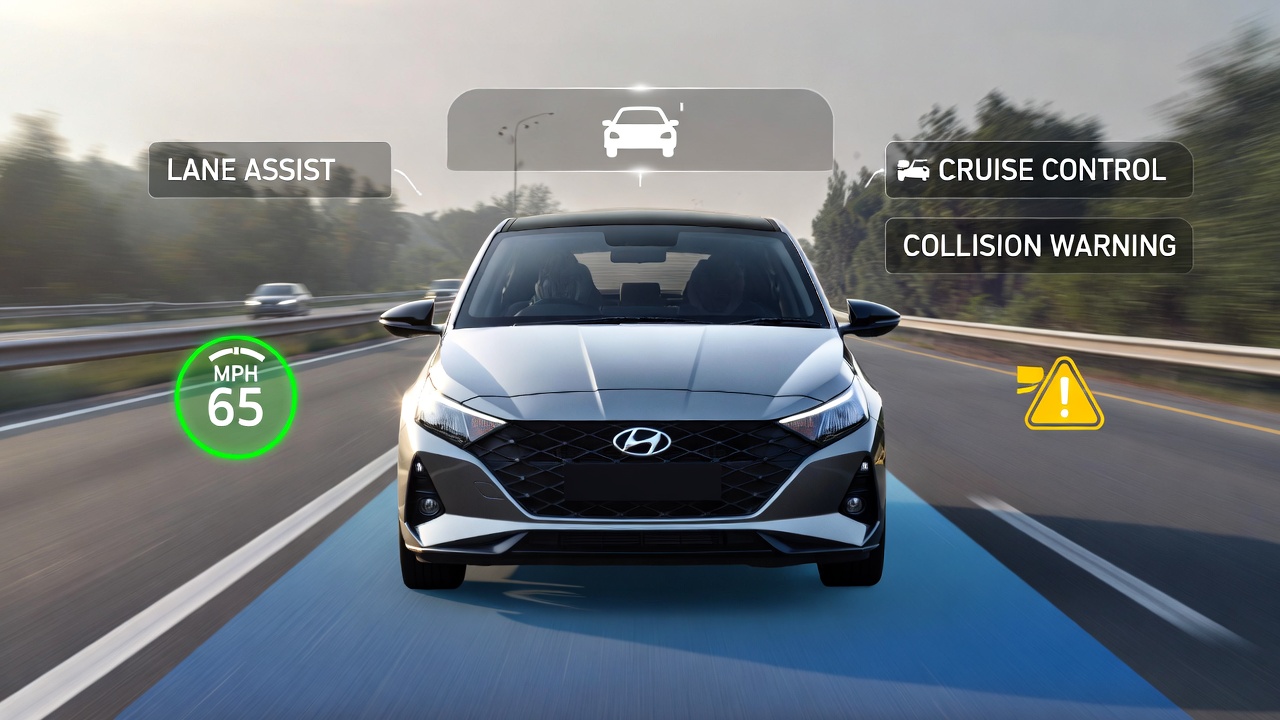
Key ADAS Features Include:
- Forward Collision Warning
- Autonomous Emergency Braking
- Lane Keep Assist
- Lane Departure Warning
- Adaptive Cruise Control
- Blind Spot Collision Warning
- Rear Cross Traffic Alert
In real-world usage, adaptive cruise control makes highway drives effortless.
Lane assist gently corrects steering if you drift unintentionally.
It’s not self-driving — and shouldn’t be treated as such — but it adds an extra layer of safety and convenience.
For tech-savvy buyers, this makes the Verna feel futuristic and future-ready.
Hyundai Verna Facelift Technology & Infotainment
Step inside at night, switch on the ambient lighting, and the cabin genuinely feels premium.
The dual 10.25-inch screens dominate the dashboard.
Highlights:
- Fully digital instrument cluster
- Touchscreen infotainment system
- Wireless Apple CarPlay & Android Auto
- Bose premium sound system
- Voice-enabled smart controls
- Wireless charging
- Hyundai connected car tech
The interface is fluid and intuitive.
Graphics are sharp.
The Bose audio system deserves special mention — it delivers deep bass and crisp vocals, turning long drives into personal concerts.
Hyundai’s connected car features allow:
- Remote engine start
- Vehicle tracking
- Geo-fencing
- Over-the-air updates
This isn’t just infotainment — it’s an ecosystem.
Hyundai Verna Facelift Competitors Comparison
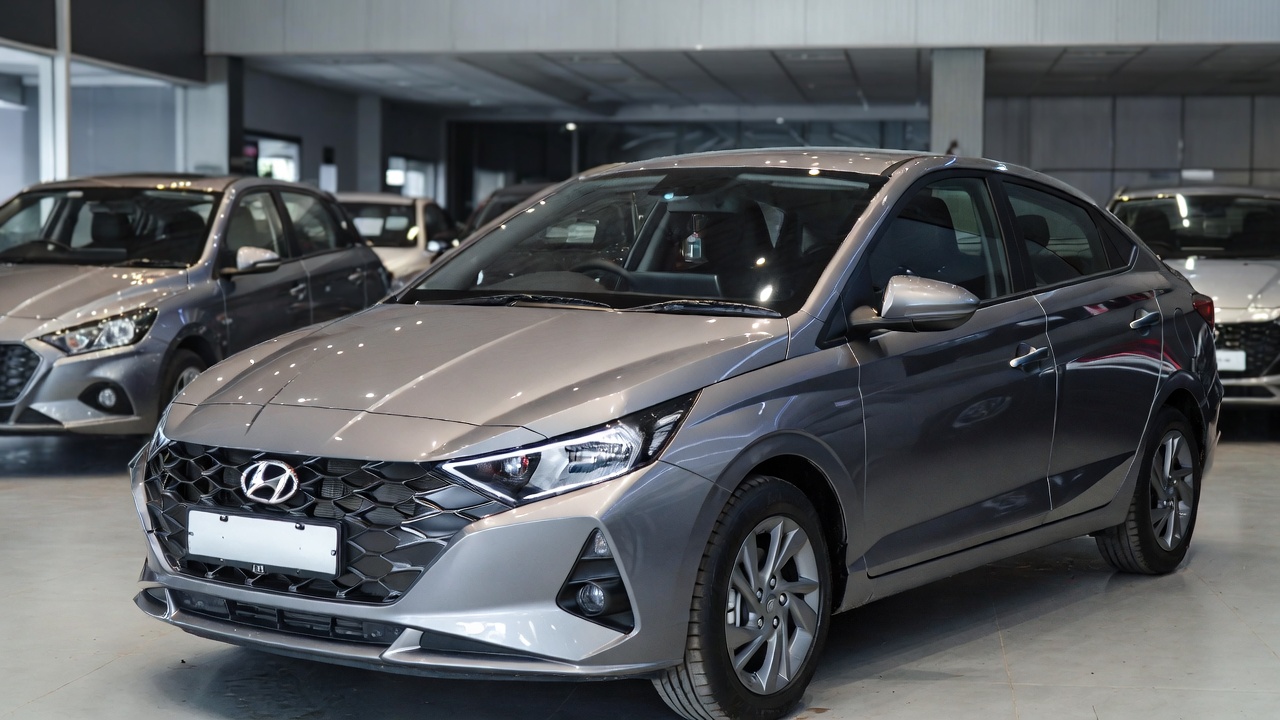
The Hyundai Verna facelift competes with some strong players in the midsize sedan segment.
Honda City
Honda City remains a benchmark for comfort and reliability. However, the Verna offers more power in turbo form and more modern styling.
Skoda Slavia
Skoda Slavia focuses on driving dynamics. It feels solid and European. Yet, Verna counters with better tech features and ADAS availability.
Volkswagen Virtus
Volkswagen Virtus delivers strong turbo performance and German engineering feel. The Verna matches its power while offering a more futuristic design.
Maruti Suzuki Ciaz
Maruti Suzuki Ciaz emphasizes comfort and mileage. But in terms of modern features and performance, the Verna sits ahead.
In short, the Verna balances performance, features, and bold design better than most.
Hyundai Verna Facelift Pros & Cons
Pros
- Powerful turbo engine
- Futuristic design
- ADAS safety features
- Spacious cabin
- Premium interior quality
- Competitive pricing
Cons
- No diesel option
- Polarizing front design
- Turbo variants can feel expensive
Hyundai Verna Facelift Real-World Driving Experience
You can read specifications all day.
But driving tells the real story.
In city conditions, the Hyundai Verna facelift feels refined and easygoing.
-
Steering is light at low speeds.
-
Visibility is decent despite the sloping design.
-
The suspension absorbs potholes comfortably.
On highways, the character changes.
-
The turbo variant feels alive.
-
Press the accelerator and the car surges forward with confidence.
-
Overtaking trucks feels effortless.
-
High-speed stability is impressive.
-
Even at higher speeds, the car feels planted and composed.
-
Cabin insulation reduces wind and road noise effectively.
-
The DCT gearbox shifts quickly in spirited driving.
Meanwhile, the naturally aspirated engine is smoother and more relaxed for daily commuting.
Whether you’re navigating city traffic or cruising at triple-digit speeds, the Verna adapts beautifully.
Who Should Buy the Hyundai Verna Facelift?
This sedan isn’t for everyone — and that’s perfectly fine.
It’s ideal for:
- Professionals upgrading from hatchbacks
- Families who value rear-seat comfort
- Enthusiasts who want turbo power
- Tech lovers who appreciate ADAS
- Buyers who prefer sedans over SUVs
If you want:
- Strong performance
- Premium interior
- Modern safety tech
- Bold design
Then the Verna makes sense.
However, if your priority is diesel mileage or SUV-style ground clearance, you might explore alternatives.
Why the Hyundai Verna Facelift Matters in 2026
The Indian market is SUV-heavy.
Yet the Hyundai Verna facelift proves that sedans still have an identity.
Sedans offer:
- Better aerodynamics
- Lower center of gravity
- Superior high-speed stability
- More engaging driving dynamics
Hyundai didn’t just update the Verna.
It redefined what a midsize sedan should feel like in 2026 — bold, digital, powerful, and safe.
In a way, it’s a statement car.
A reminder that not everyone wants to follow the SUV trend.
Some prefer precision over height.
And the Verna delivers that precision beautifully.
Hyundai Verna Facelift Ownership & Maintenance
Buying a car isn’t just about performance — it’s about long-term peace of mind.
Hyundai’s widespread service network across India works in its favor.
Key Ownership Highlights:
- Affordable routine maintenance
- Easily available spare parts
- Strong resale value
- Standard warranty coverage
- Extended warranty options
Compared to European rivals, service costs are generally more reasonable.
Fuel efficiency keeps running costs manageable.
Hyundai’s reputation for reliability adds further confidence.
For buyers planning 5–7 years of ownership, the Verna offers reassurance.
Is It Worth the Upgrade?
If you own an older Verna generation, the difference is dramatic.
The new model offers:
- Sharper design
- Bigger dimensions
- Much more powerful turbo engine
- ADAS safety
- Fully digital cabin
It doesn’t feel like a minor facelift.
It feels like a generational leap.
Even compared to rivals, the Verna stands out because of its combination of power, features, and pricing.
If you’re upgrading from a hatchback or compact sedan, the jump in comfort and performance will feel substantial.
Conclusion : Hyundai Verna Facelift Review 2026
The Hyundai Verna facelift is a strong statement in today’s SUV-dominated market.
It shows that sedans are not outdated. In fact, when designed properly, they can offer better stability, smoother driving, and a more premium feel than many SUVs in the same price range.
This new Verna brings together many important things in one package:
- A bold and futuristic design
- A powerful turbo petrol engine
- Comfortable and spacious interiors
- Advanced safety features including ADAS
- Modern infotainment and digital screens
- Good balance between performance and mileage
It is not a boring sedan. It is not a basic upgrade either. It feels like Hyundai has completely refreshed the Verna to match modern expectations.
Of course, it may not be perfect for everyone. Some buyers may still prefer SUVs for their higher seating position. Others may miss the diesel engine option. And the front design might feel too bold for some people.
But if you look at the complete package — performance, safety, comfort, technology, and pricing — the Verna facelift stands very strong in its segment.
For daily city driving, it feels smooth and refined.
For long highway drives, it feels stable and powerful.
For families, it offers space and comfort.
For enthusiasts, the turbo variant adds excitement.
If you are planning to buy a midsize sedan in 2026, this car deserves serious consideration. It offers a premium experience without entering luxury-car pricing.
The best way to decide? Take a proper test drive.
Sit in the back seat.
Drive it in traffic.
Try the turbo acceleration on an open road.
You might realize that choosing a well-built sedan like the Hyundai Verna facelift can be a smarter and more enjoyable decision than simply following the SUV trend.
Sometimes, the better choice isn’t the most popular one — it’s the one that fits your needs perfectly.
And for many buyers, this Verna could be exactly that.
FAQs for Hyundai Verna Facelift
1. What is the engine power of the Hyundai Verna facelift turbo variant?
Ans. The turbo petrol engine produces segment-leading power, offering strong acceleration and impressive mid-range performance.
2. Does the Hyundai Verna facelift come with a diesel engine?
Ans. No, the facelift version is available only with petrol engine options.
3. What is the real-world mileage of the Hyundai Verna facelift?
Ans. City mileage ranges between 13–15 km/l, while highway mileage can go up to 17–20 km/l depending on driving style.
4. Is ADAS available in all variants?
Ans. No, ADAS features are available in higher trims like the SX(O) variant.
5. How many airbags does the Hyundai Verna facelift offer?
Ans. It offers up to 6 airbags, depending on the variant.
6. Is the Hyundai Verna facelift good for long drives?
Ans. Yes, thanks to comfortable seating, strong highway stability, and adaptive cruise control in higher variants.
7. Which variant offers the best value for money?
Ans. The SX variant offers a balanced mix of features and pricing.
8. Does the Verna facelift have ventilated seats?
Ans. Yes, ventilated front seats are available in higher trims.
9. How does it compare to Honda City?
Ans. Compared to the Honda City, the Verna offers more power and advanced tech features like ADAS.
10. Is the turbo variant suitable for daily city use?
Ans. Yes, but mileage may drop slightly in heavy traffic compared to the naturally aspirated engine.
11. What is the boot space of the Hyundai Verna facelift?
Ans. The Verna offers generous boot space suitable for family trips and airport runs.
12. Is the Hyundai Verna facelift worth buying in 2026?
Ans. Yes, especially for buyers looking for a bold design, turbo performance, and modern safety features in a midsize sedan.